
Spring Rose Care
How to get your roses summer ready with a feed and mulch

Since I now prune my roses in the Autumn, you would probably think that the spring is now nice and quiet in terms of rose maintenance. However there is still one important job to do before they start growing, and if you don’t do it you can risk having a very disappointing display of flowers in the summer. It’s time to get the wheel-barrow and rake out, and give your roses a good mulch of manure.
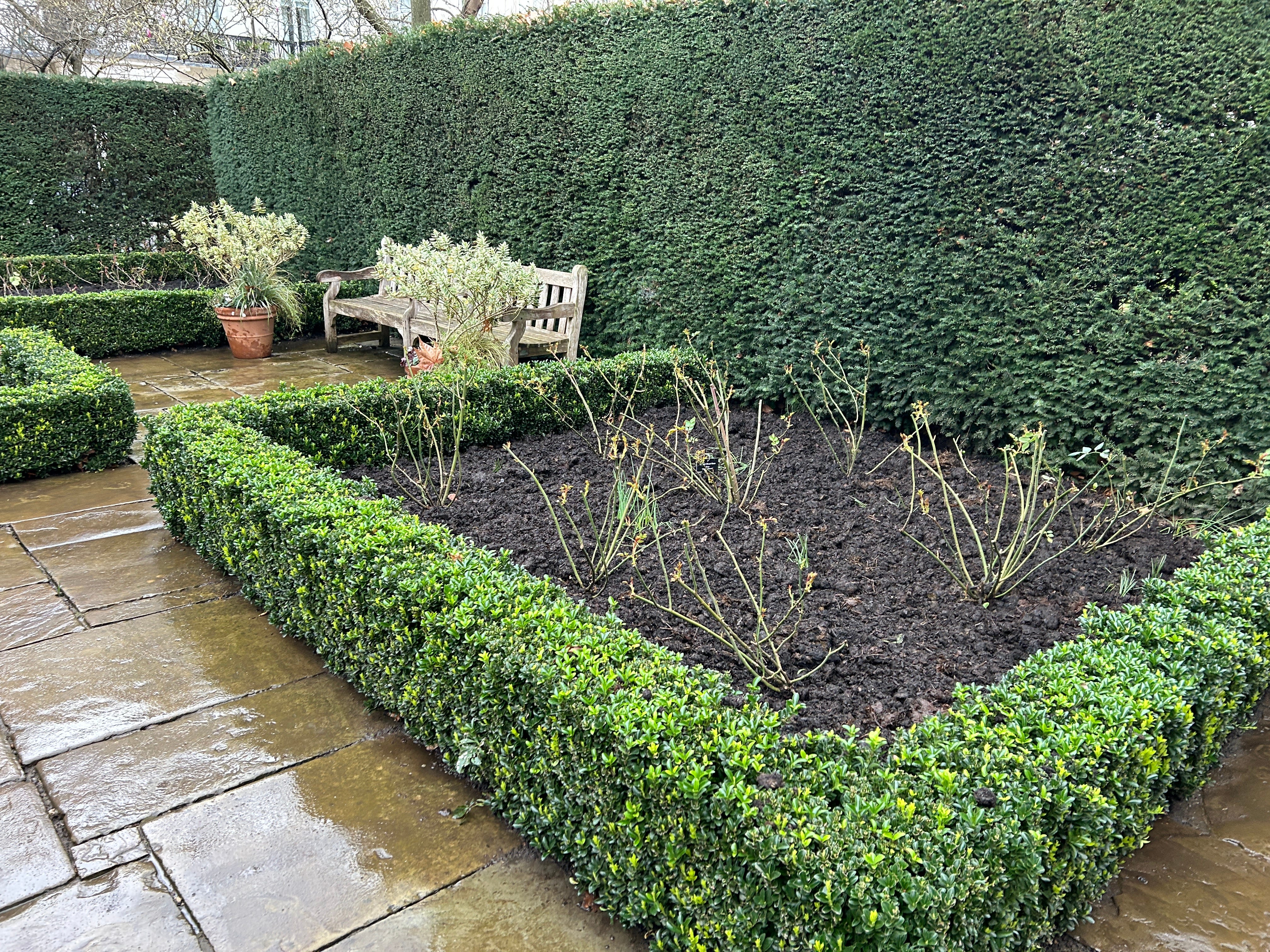
The purpose of this feed and mulch is to give the soil around your roses a good baseline level of nutrients before the roses start using it up as they begin to grow, and then supply them with a constant source of nutrients throughout the rest of the season as the manure breaks down into the soil. Plus like all mulches, it helps to suppress weeds and hold moisture in the soil.
Preparation
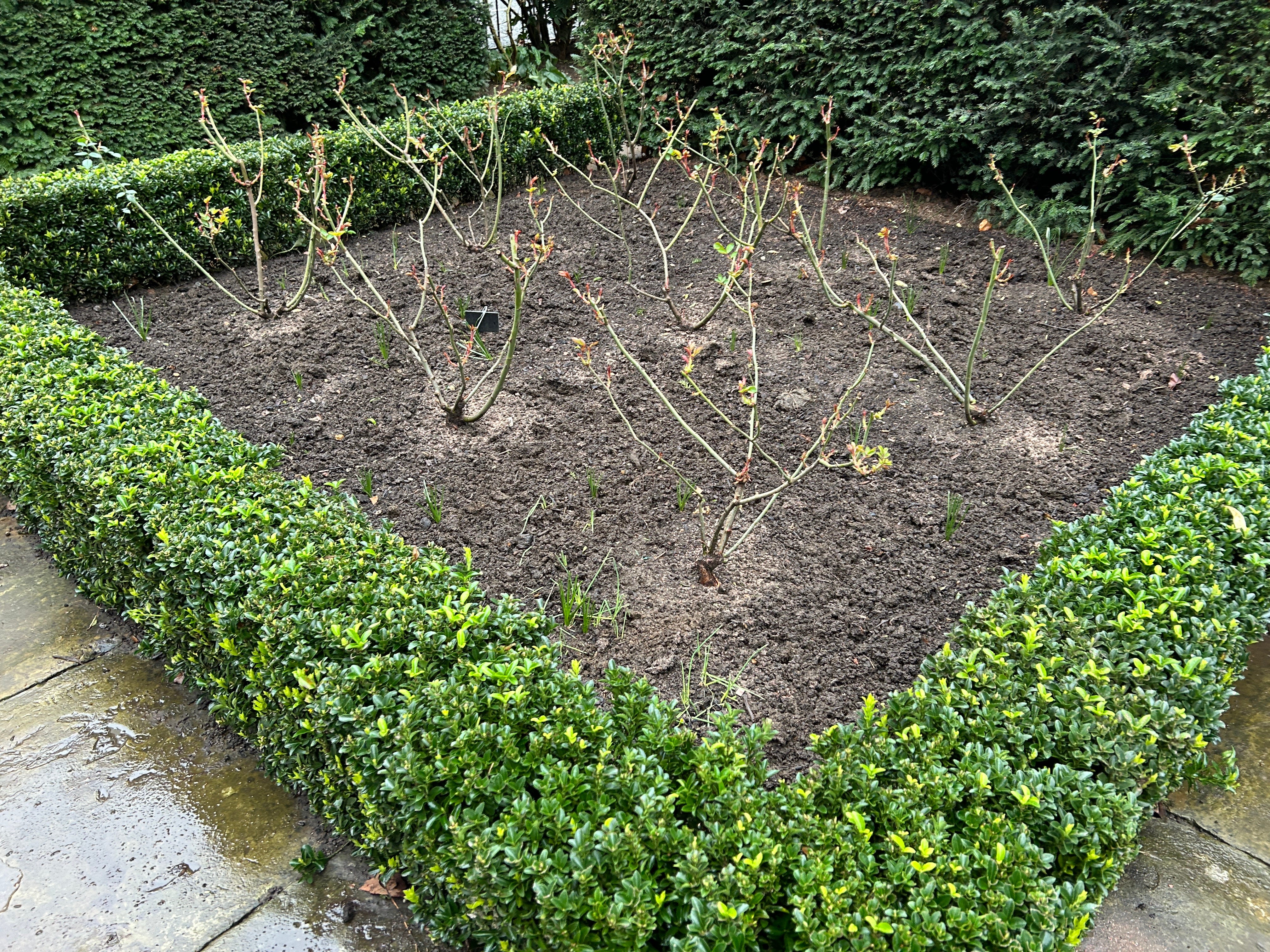
Before you even touch as shovel, there’s some important preparation you need to do to the beds. Firstly, you need to rake out all of last year’s leaves and debris from around the base of the roses. This is to stop any pest and diseases from being reintroduced back onto the plants.
The next stage is to spread a slow release fertiliser to the bed around the base of the roses. Ideally this should be an even mix of Nitrogen, Phosphorus, and Potassium (NPK). But it’s the Nitrogen that’s important, as this nutrient is vital for growth of stems and leaves, and is what is needed at the early part of the season. Later on in the season you move over to a high potassium feed, which is better for flower growth.
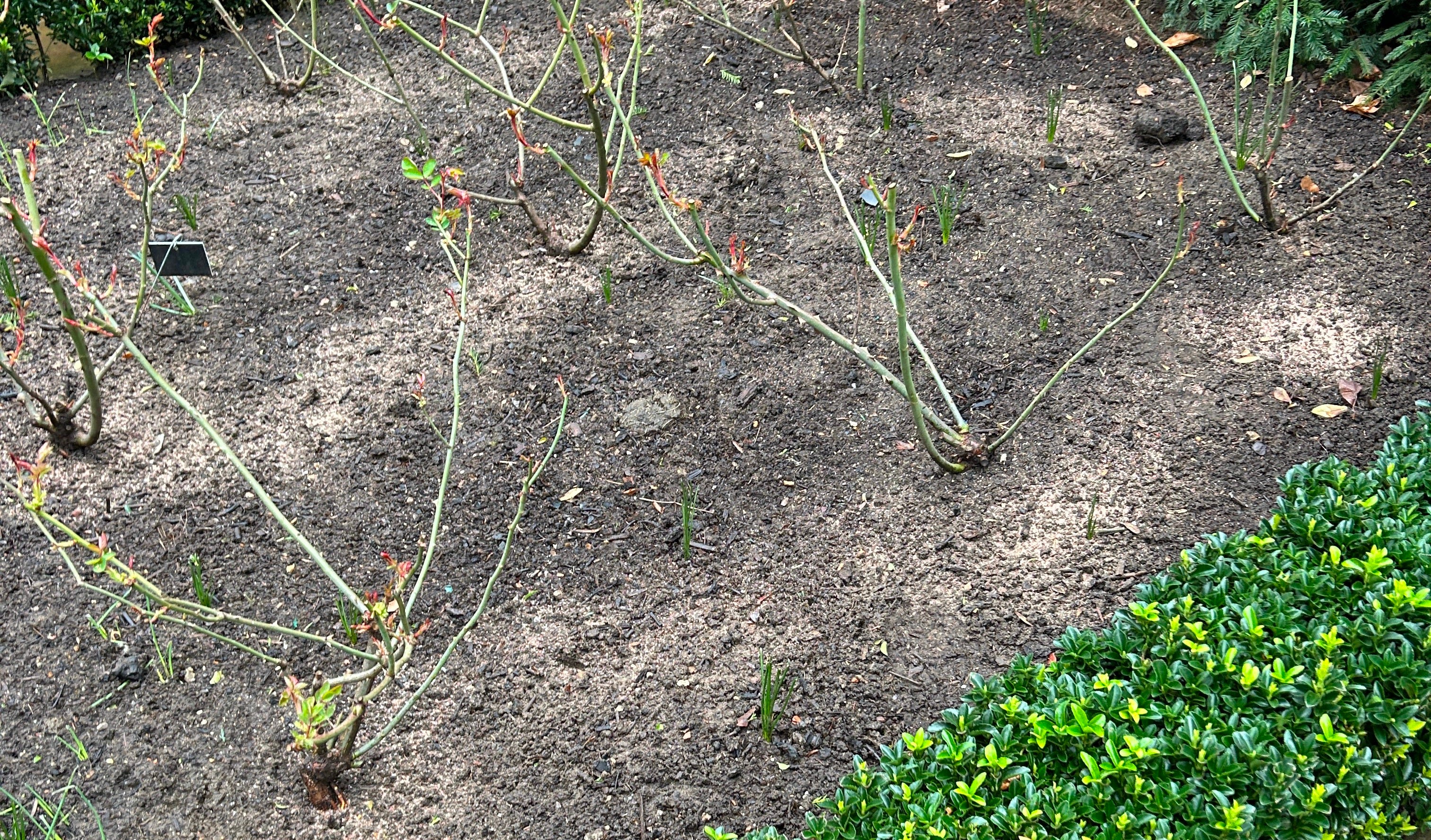
The final preparation is to use a cultivating tool or rake to break the surface of the soil, stopping a cap forming and becoming a barrier between the soil and mulch.
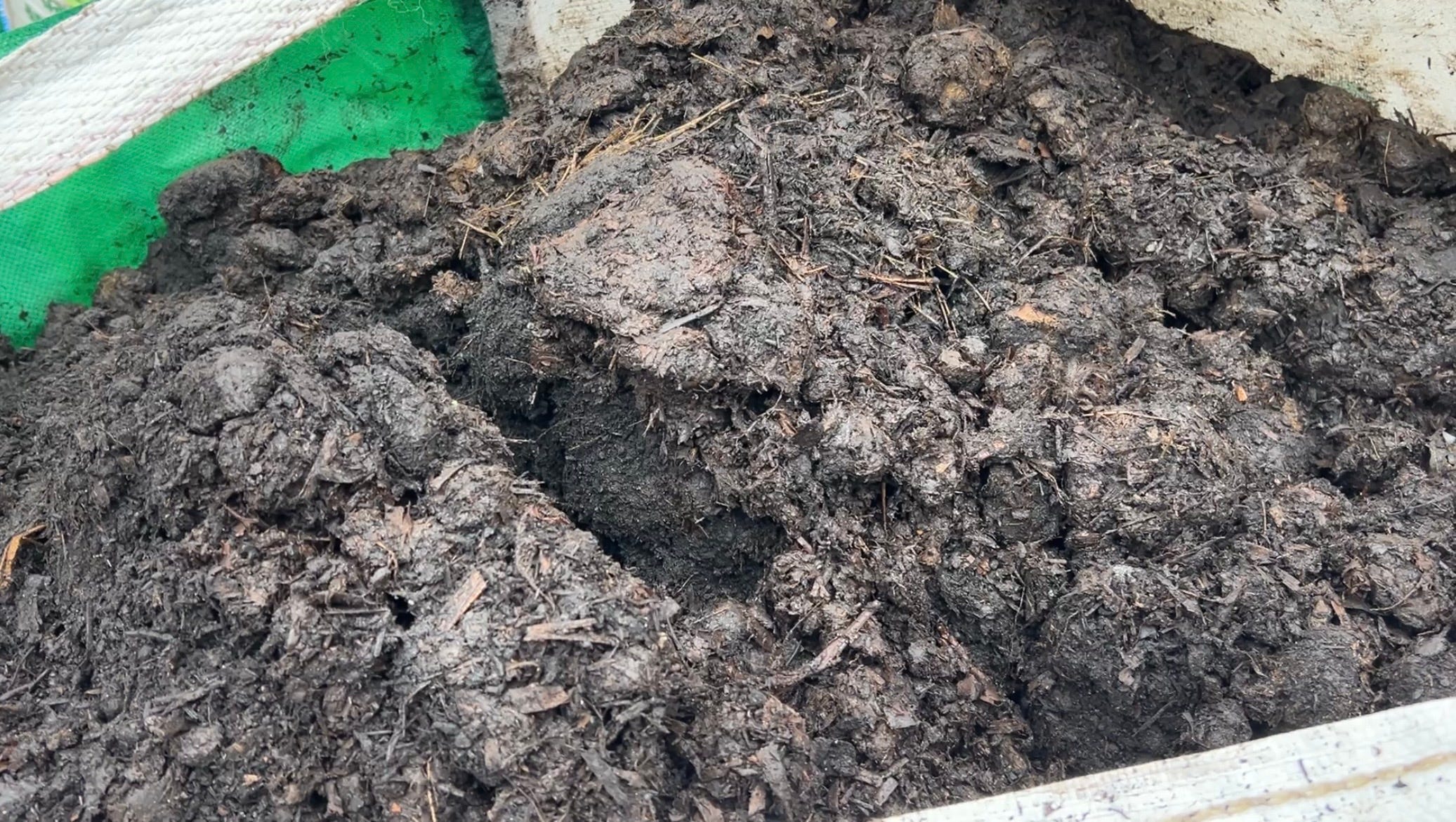
Black Gold
In terms of what kind of mulch, I always go for a well-rotten farmyard manure. This contains a lot more nutrients than regular compost, although it’s a lot more difficult to spread and can clump up. It’s bit more expensive from garden centres or commercial suppliers, but if you have a stables near by they are normally giving it away. That being said, even if you can’t get hold of any, regular compost will do just fine.
Spreading the Mulch
The final stage is to just spread the mulch all over the beds or around the base of the roses. If you’re not doing a whole rose bed and just individual roses, you want to cover an area of about 0.5m away from the base of the rose. As always the mulch should be around 1 inch or 2cm in depth. The most important thing is to ensure there’s no mulch touching the rose stems themselves as this can scorch them.
As a reward for reading so far, here’s a fun time-lapse video of me mulching a couple of my rose beds.
Once mulched, the roses should now be all set for the coming season, and if they are anything like mine already bursting with new buds. So you can now sit back, and just wait for those flowers to come.
Around my roses I’ve planted a lot of thyme and geraniums to try and deter the aphids (not actually very effective) but it also looks pretty- it’s all a bit dense, but do you recommend wedging the mulch down underneath these plants?